

Nuclear
Ensuring Integrity at the Flamanville 3 EPR
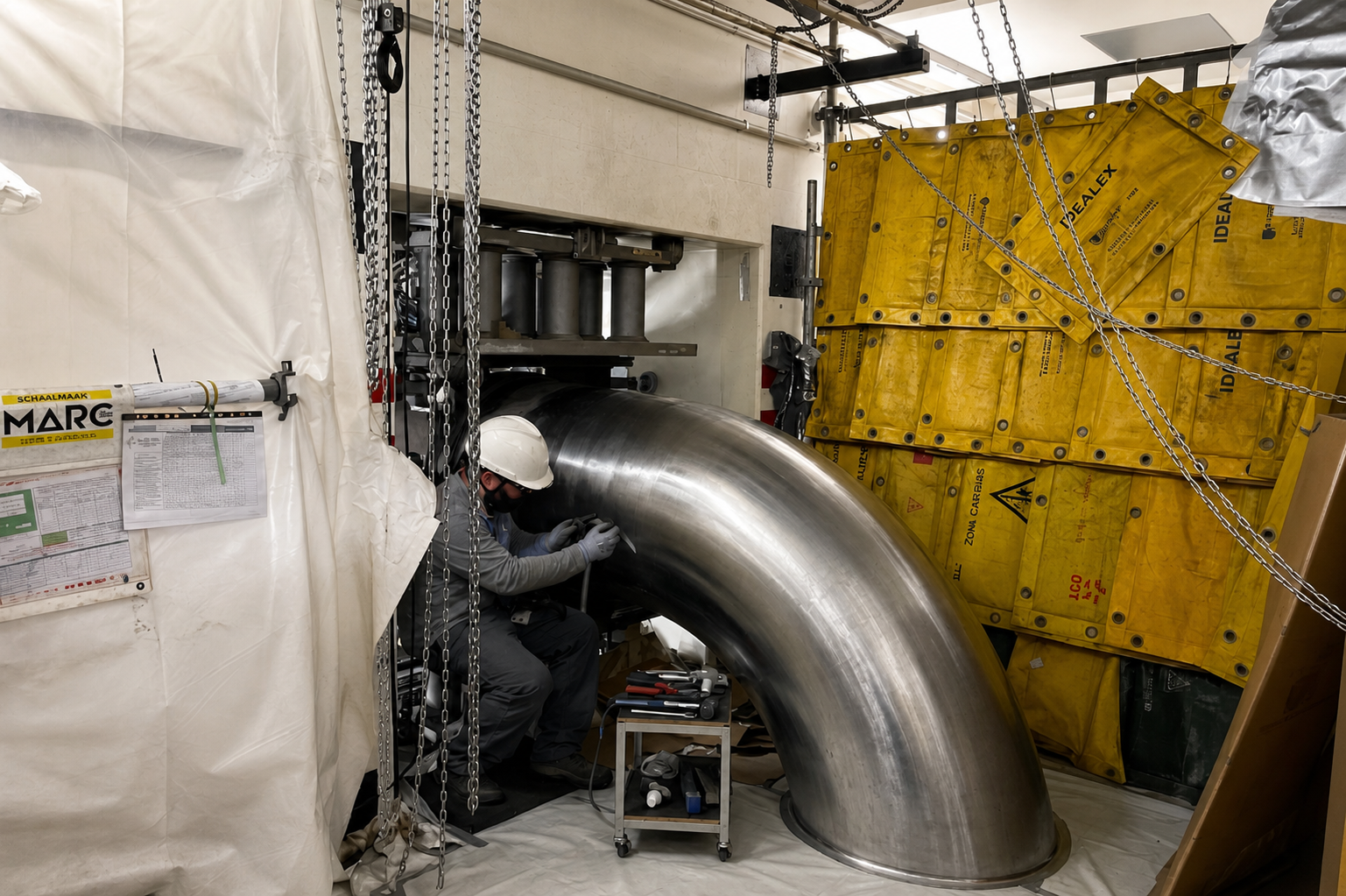
PTEM has played a specialized technical role in the final completion phases of the Flamanville 3 EPR (European Pressurized Reactor) in France. Its expertise was critical in addressing complex mechanical challenges related to the Main Secondary System (VVP) and verifying the structural integrity of the Steam Generators (GV) before the reactor’s startup.
Working within a high-stakes nuclear environment, PTEM ensured that all repairs and tests met the strict safety standards required by the ASN (Autorité de sûreté nucléaire).
Project Focus: Weld Remediation & High-Pressure Validation
PTEM’s intervention focused on critical mechanical components of the nuclear island, where precision and reliability are essential.
1. Strategic Weld Repair Operations
- VVP Circuit Restoration: Support in the remediation of welds on main steam letdown pipes, including technical logistics for high-precision robotic welding on containment penetrations.
- Exclusion de Rupture Compliance: Ensuring all repairs met “break preclusion” criteria, requiring near-perfect weld quality to minimize rupture risk.
- NDT Coordination: Management of Non-Destructive Testing processes (visual, ultrasonic, radiographic) to validate repair quality.
2. Steam Generator (GV) Hydrostatic Testing
- Pressure Testing: Preparation and execution of hydraulic tests under pressures exceeding normal operating levels.
- Leak Path Analysis: Monitoring to ensure zero leakage across all joints.
- Structural Validation: Confirmation of steam generators’ readiness for safe heat transfer to turbines.
Impact: A New Era for French Nuclear Energy
- Successful Grid Connection: Contribution to milestones leading to first power generation and full 1650MW capacity.
- Safety Certification: Support for ASN commissioning approval through technical validation and documentation.
- Industrial Excellence: Reinforcement of the nuclear supply chain through execution of complex remediation programs.
Add new comment